The younger soldier he had saved screamed through the smoke and crawled toward him, refusing to leave him behind. “No! Sergeant, stay with me!” he cried. Two other soldiers rushed out from behind the broken concrete barrier, grabbing the wounded father under his arms and shoulders. Dust exploded around them as they dragged him across the ground, his boots scraping through the dirt, the family photograph still clenched tightly in his trembling hand. The father’s lips barely moved as he whispered, “My daughter… tell her… I tried to come home.”
They carried him down into an underground medical bunker lit by harsh emergency lights. A military doctor rushed forward with nurses and medics, shouting, “Put him here! Now! Keep pressure!” The father was placed on a metal emergency bed, his face pale, his breathing weak, his uniform covered in dust. The doctor looked at the monitor, then leaned over him and said firmly, “Listen to me, soldier. You are not dying here. Not today.”
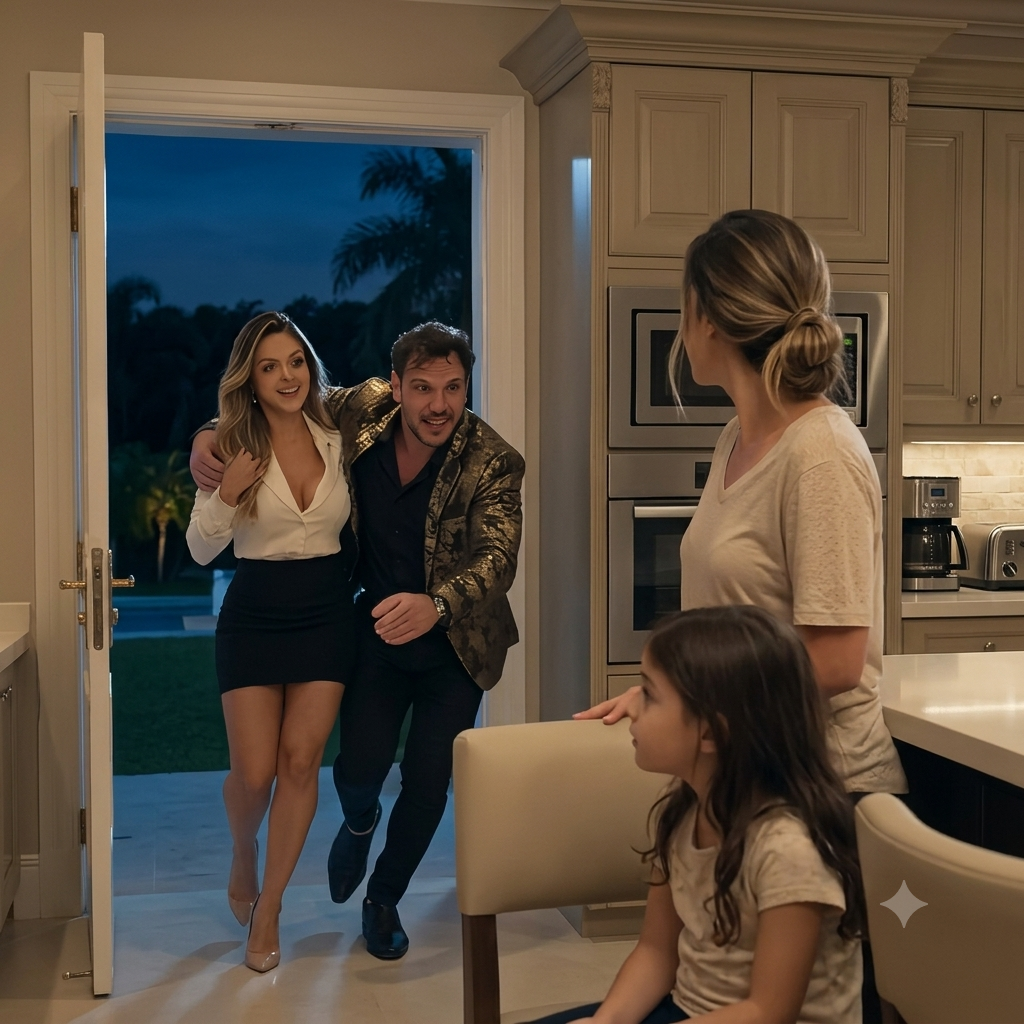
As the father’s eyes fluttered, the camera cut far away to his home. His wife stood quietly in the kitchen, cooking dinner for their daughter, trying to act normal even though her heart felt heavy. The warm light over the stove made the house look peaceful, but her hands trembled as she chopped vegetables. Suddenly, the knife slipped and cut her finger. She gasped, staring at the small wound, then whispered, “Something’s wrong…”
Their little daughter ran into the kitchen and saw her mother frozen in fear. “Mommy?” the girl asked, her voice trembling. The mother quickly hid her injured finger, but tears were already forming in her eyes. The child ran forward and hugged her waist tightly. “Is Daddy okay?” she asked. The mother wrapped one arm around her daughter and forced herself to answer, “Your daddy is brave. He promised he would come home.”
Back in the bunker, the father’s heartbeat grew dangerously weak. The doctor shouted, “Don’t lose him! Again!” The younger soldier stood near the wall, crying silently, still covered in dust from the battlefield. He stepped forward and said through tears, “He saved me. Please… please save him.” The father’s hand slowly opened, revealing the blood-marked family photograph. The doctor saw the smiling little girl in the picture and said, softer now, “Then we bring him back to her.”
Hours later, the sound of the heart monitor steadied. The doctor lowered his head in exhausted relief and said, “He’s alive.” The younger soldier covered his mouth, breaking down. Days passed in quiet flashes: hospital lights, bandaged hands, slow breathing, a wheelchair beside the bed, and the family photograph placed carefully on his blanket. When the father finally opened his eyes, he looked at the doctor and whispered, “Can I go home?” The doctor answered gently, “Yes. But your life will be different now.”
Then came the final day. A car stopped in front of his home. The front door opened, and his wife stepped outside with their little daughter. The father appeared in a wheelchair, thinner and weaker, but alive. His daughter froze for one second, then ran to him crying, “Daddy!” He opened his arms with shaking hands and said, “I told you I’d come home.” She threw her arms around his neck, and his wife knelt beside him, pressing her forehead to his. Through tears, she whispered, “You came back to us.” He looked at them both and answered, “I had to. You were my reason.” The final frame holds on the three of them embracing around the wheelchair, broken by war, but still together.